Founded in 1984, Eileen Fisher is a brand that’s perhaps best known for its intentional design ethos: sophisticated separates, natural fibers, and versatile, time-tested pieces meant to anchor the everyday wardrobe. Since its early beginnings, the brand has stood firmly on its commitment to high-quality construction, continuously evolving to make dressing easier for today’s modern woman.
The designer behind the namesake label, frustrated by her own challenges with getting dressed, established the line of essentials with an emphasis on wardrobe building that goes further than ever thought before. The brand’s current mission statement, where clothes are “ethical, timeless and designed to work together” encapsulates this persona almost perfectly. The mission now, more audacious than ever, has evolved to include a new, lofty, yet essential pledge: to be “part of a responsible lifestyle”; to drive towards a “more sustainable future”, for all.
However, unlike the Eileen Fisher of today, sustainability was not always top-of-mind for the designer.
While natural fabrics and ethical sourcing were always part of the equation, Eileen Fisher was far from the pivotal sustainability model it’s come to pride itself on today.
In 2012, Eileen Fisher was preparing to set out on a company trek to visit suppliers in Southeast Asia. Upon her arrival, Fisher quickly came to bear the severe ecological challenges plaguing her supply chain, the local communities, and the industry at-large. She saw the depleted agricultural soils, the rampant water shortages, and the sheer desperation of resource-scarce communities struggling to access basic necessities, like clean water. It was in this moment where Fisher began to viscerally recognize the gravity of the climate crisis, the fashion industry’s role within it, and how little action was being done to reverse it.
Upon her return to the States, Fisher was compelled to take bold action herself — setting into motion a plan that would change the course of her company entirely. Fisher quickly recognized her strategies, like natural fabrication, albeit constructive, were not fully embedded into all of her collections as she had hoped. And while the company lived its values of fair trade and safe labor authentically, it did not have any strategic plans to advance ethical sourcing from an external, corporate angle.
Eventually, Fisher would tap several of her company executives to converge at a corporate retreat. Organized solely for the purpose of executing on her renewed vision, Fisher proposed her new identity for the brand. “The preeminent fashion leader in environmental and social production,” mused Fisher. The mission would hold weight.
Not before long, the team would eventually coalesce on a big-picture plan: a set of sustainability goals through the year 2020, known collectively as VISION 2020.
Today, a year after the company’s target date, Eileen Fisher has proudly achieved the status of B Corporation: a “quadruple bottom line” company valuing the environment, human rights, employee welfare (as well as financial interests), as part of doing business.
As outlined in VISION 2020, the company achieved 98% of cotton production from organic sources (up from 88% in 2015), and 79% of wool production from responsible or recycled sources (up from 0% in 2015). The company has also expanded its mission to extend beyond responsible sourcing — advancing a circular business model grounded in both community involvement and human rights empowerment.
Their two-pronged recycling program, Renew Take-Back and Waste No More, repurposes gently-used Eileen Fisher items from the community. Working in concert with a collective of American-based designers, textile artists, and seamstresses, the programs help to restore function and design into original garments that would otherwise be discarded. By promoting this circular business model, Eileen Fisher is working to address the critical issue of ecological harm that results from the industry’s large carbon footprint, from manufacturing, to disposal, to garment waste in our global landfills.
As a B Corp organization, Eileen Fisher is also accountable to protecting human rights along environmental factors. Since 2005, the organization has partnered with an alternative supply chain in Arequipa, Peru, aptly called project Our Love, Peru. Working with over 450 families in the region, Eileen Fisher invests in their trade, preserving traditional and organic techniques, while providing safe, dignified jobs to often marginalized communities.
Evidently, if any fashion brand is a blueprint for sustainability, it’s Eileen Fisher in the 21st century. Taking shape through organic designs, closed-loop production, and ethical sourcing, Eileen Fisher has given agency to an industry that is has largely kept to the regressive status quo. The brand’s journey to a greener, more prosperous world for all has set the new standard: one that sustains a future that generations can ultimately be proud of.
Join our community today for special features, smart style tips, top trend reports (and more)—brought to you only when it matters (we don’t spam, promise)
Our Sunday Best, Straight to Your Feed. Follow us on social today!
Amplify Melanated Voices: that’s the hashtag taking social media by storm this week — and daring us all to rethink what we thought we knew about Black identity in the digital realm.
First introduced on May 29 by mental health therapist, Alishia McCullough and activist Jessica Wilson, #AmplifyMelanatedVoices emerged with just one simple ask: promote the work of BIPOC (Black, Indigenous, People of Color) digital content creators in place of your own (or the work of White counterparts).
McCullough and Wilson launched this challenge to help correct the societal trend of favoring the White narrative on social justice. As BIPOC themselves, McCullough and Wilson knew the oppression of their community has, unfortunately, not escaped new-age social arenas, such as social media.
“Look at your favorite white social media content creators, they most likely have thousands/millions of followers and endorsements,” wrote McCullough in an Instagram post on May 29. “Meanwhile, pages of Black and Brown people are being policed, reported, and targeted by trolls while their work is stolen and repackaged by these top names,” wrote McCullough. “It’s time to pass the mic to people that need to be amplified, versus more privileged voices advancing themselves while oppressing others.”
The challenge, now of global scale and recognition, was initially set to run from June 1-7. On June 8, McCullough posted a new call to action: center Black and Brown experiences lifelong.
The swift adoption of the #AmplifyMelanatedVoices challenge is proof enough that its lasting power may indeed be just that: lifelong. As we continue to amplify Black voices and Black lived experiences, let’s also vow to actively diversify our most-frequented online feeds, indefinitely. Here, we’ve rounded up 14 Black influencers shaking things up in the world of entrepreneurship and emerging media, with innovative products, services, and personal brands of their own. Spanning fashion, beauty, entertainment, and more, this curated group only scratches the surface where powerful Black voices are concerned. Without question, we’ll be following, and amplifying, now and forever.
Join our community today for special conversations, smart style guides, discerning trend reports (and more)—brought to you only when it matters the most (we don’t spam, promise).
Our Sunday Best, Straight to your feed. Follow us on social today!
In a time of social transformation, the power of voice cannot be overstated. The tragic death of George Floyd at the hands of police has gripped our nation with grief, the likes of which have galvanized communities with valor, and empowered voices to demand change.
If the countless protests punctuating major cities like New York and Washington D.C. mean anything in the way of social change, it’s that activism and speech matter. Emboldened and frustrated by enduring racial inequity, citizens of all stripes are masterfully using speech as vehicles for rousing real change. The evidence? Take, for example, the recent wave of police reform acts, as well as historic apprehensions, passed to bring justice for the voices that were so violently silenced. In states like California and Connecticut, as well as uniquely-distraught cities like Minneapolis, government officials enacted policies that would prohibit the use of extreme police tactics against the public. And just this last week, following a four-month stretch of public outcry, the officers suspected in Ahmaud Armery’s death were indicted on murder charges. Justice long overdue, but justice nonetheless.
Truth be told, our country’s racial reckoning is a solemn reminder of the voices that have long fallen on deaf ears. It’s a reminder of the hard, yet necessary work for racial equity that we must all undertake and continue to advance. It’s a reminder, chiefly, of the many stories of adversity that continue to befall Black Americans, stifling social progress, and curbing economic prosperity in-kind.
Bringing the lived experiences, the learnings, and musings of Black Americans into the fore is a task more important now than ever before. Literature, with its sweeping and versatile appeal, is often the tool of choice for uncovering these learnings. And poetry, literature’s more digestible cousin, has made a resurgence in recent days — offering not just resourceful prose, but a sense of respite for a society grappling with grief.
It’s no secret that the Black community is brimming with talented artists, writers, designers, and the like. 30-year-old Morgan Harper Nichols, a writer, and an artist herself, is a fierce advocate of centering Black experience, a philosophy she’s held since her brand’s inception. In the confines of poetry and illustration, Nichols derives her creative inspiration from the stories of others — transforming their lived experiences into deftly-written poetry, set to the backdrop of her own mixed-media illustrations, often abstract and realist in nature.
In as little as a four-line stanza, bringing color to stories with vivid craft, Morgan Harper Nichols is more than just a millennial voice to know. For many, Nichols is an envoy of lived truth, and for our society, today, she’s a voice defining the awakening of our time.
Shop Morgan Harper Nichols’ collection with Fringe Studio here
Our Sunday Best Weekly
Join our community today for special conversations, smart style guides, discerning trend reports (and more)—brought to you only when it matters the most (we don’t spam, promise).
Our Sunday Best, Straight to your Feed. Follow us on social today!
The optics of the face mask are changing. Non-medical grade masks, once largely deemed a consideration for self-wear, are now a mainstay, with governments across the U.S. increasingly mandating their use in response to COVID-19.
And rightfully so. The use of a face mask has emerged as the unspoken message of respect for the individual, just as much as it is, and historically has been, the image of protection.
The rising demand of cloth face masks from the general public is a seismic shift the fashion world is weathering with grace. Companies of all scale have pivoted their businesses, transforming supply chains to offer masks of varying order sizes for various needs.
And smaller designers, often limited in resources and staff, are proving themselves to be just as capable of meeting this critical need. Demonstrating agility and creativity, these independently-minded brands are reinvigorating the image of the face mask with creations that are both on-brand and serving the much-needed purpose of protection. Here, a few of fashion’s shining independent designers stepping up to help protect the public in exceptional style.
Note: The following masks have not been cleared by FDA for use in any surgical setting or where significant exposure to liquid, bodily, or other hazardous fluids may be expected; for use in a clinical setting where the infection risk level through inhalation exposure is high; for infection prevention or reduction; or for use in the presence of a high intensity heat source or flammable gas.
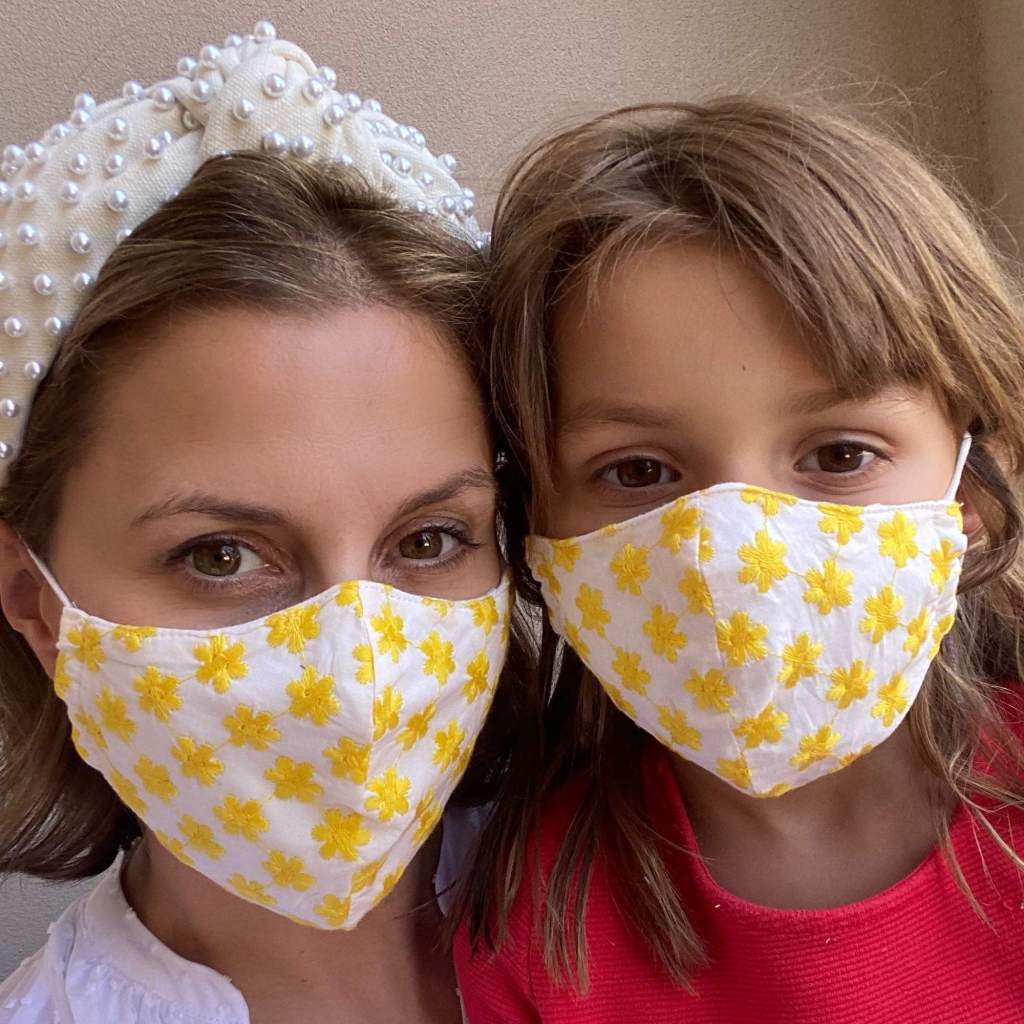
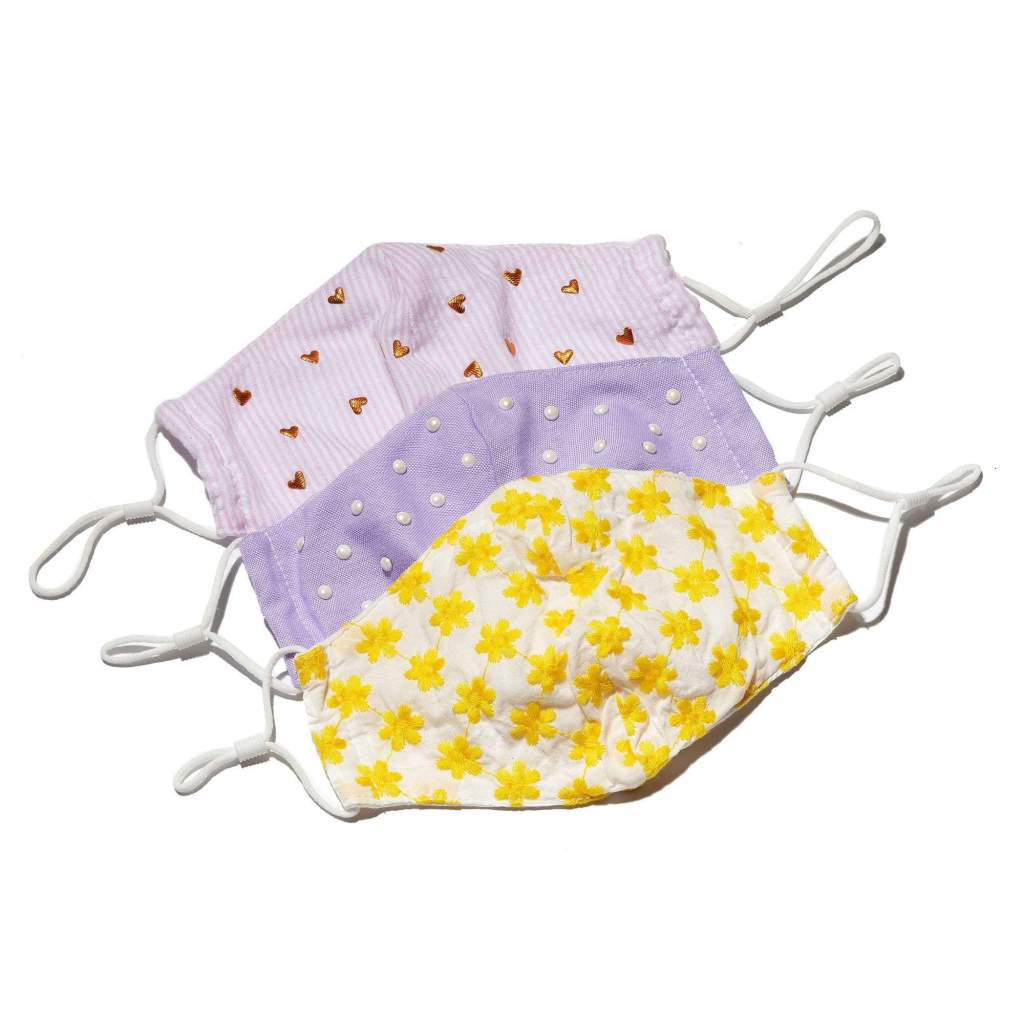
New York-based designer, Lele Sadoughi, is reimagining her signature, whimsical style in her latest offering of non-medical face masks, available for adults and children alike. Crafted in soft cotton, these masks are machine-washable and feature hand-embellishment like pearls and floral embroidery. Includes adjustable elastic ear straps and an opening for a filter pocket (filter not included).
For the self-proclaimed minimalist, you can’t beat the style of Saturdays NYC. The international lifestyle brand has recently launched a 2-pack of fabric face masks made of 100% jersey cotton with the brand’s logo discreetly embroidered for minimalist appeal. With each purchase, the brand will donate 100% of proceeds to New Yorkers in need by way of Food Bank for New York City.
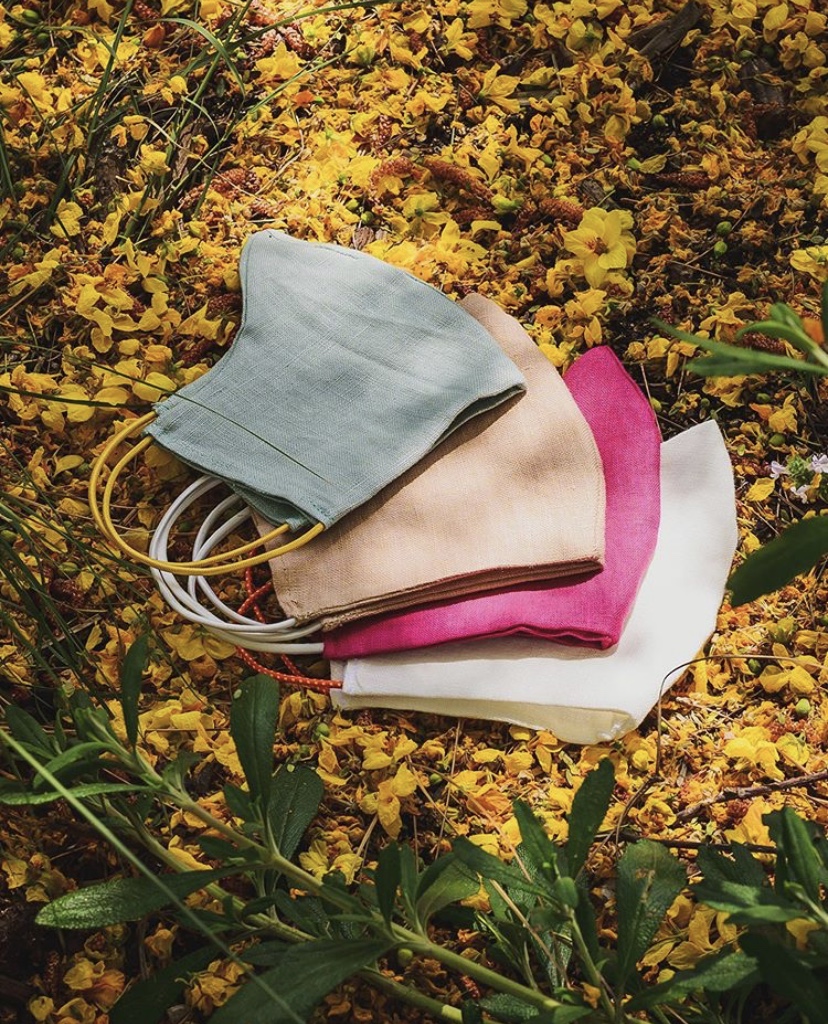
Boasting high-quality craftsmanship and sustainable fabrication, Los-Angeles based designer, Rachel Craven has expanded her American-made brand to include non-medical face masks—made of European linen, no less. Naturally antibacterial and 30% stronger than cotton-made counterparts, each mask features a pocket for a replaceable filter and heavy-duty cord elastic ear loops. What’s more, for each mask purchased, RC will donate one mask to 1736 Family Crisis Center, a nonprofit providing lifesaving support to victims of domestic violence, human trafficking, and families faced with homelessness.
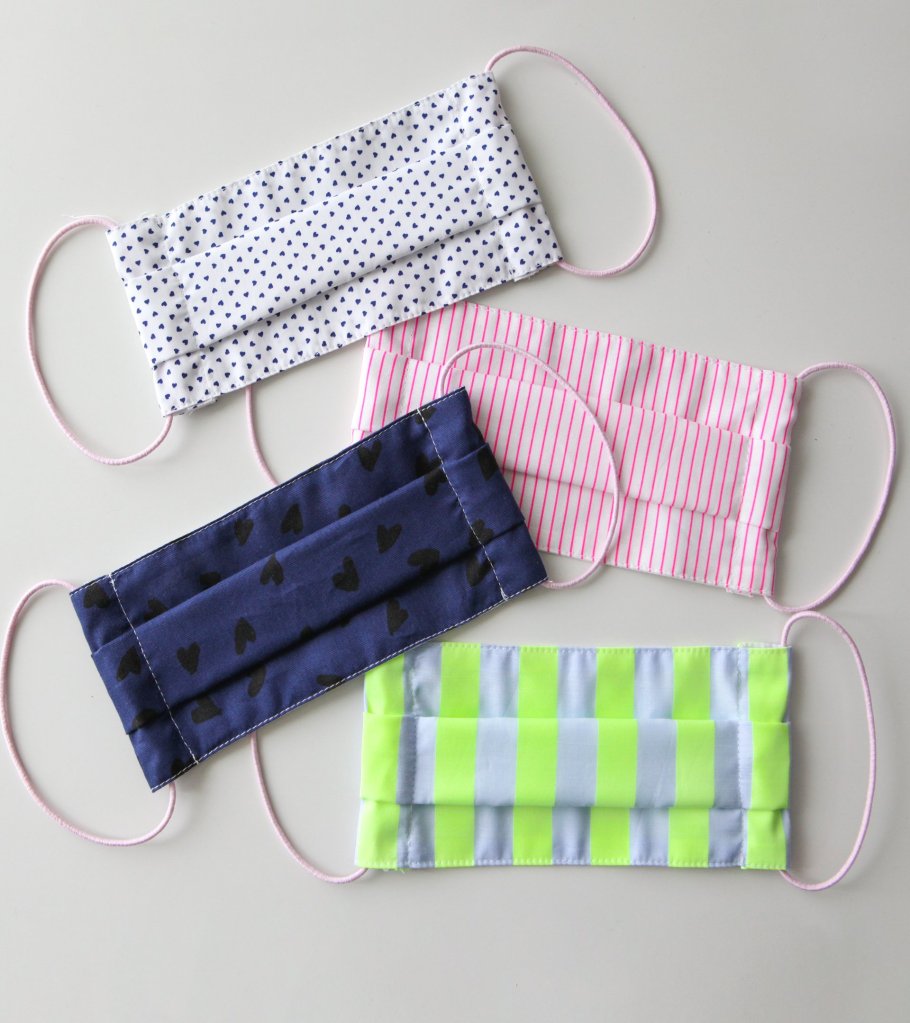
Tokki, a sustainable gift-wrap company founded by Jane Park of Julep Beauty, has redirected 100% of its cloth resources to produce face masks for the general public. Tokki has used their supply of “quilter’s cotton,” a tight-weave, 100% cotton fabrication, to create inspired designs imitating forms in nature. For every mask purchased, Tokki will donate one mask to a frontline worker in need. All masks feature an elastic trim for ear loops and an interior pocket for an optional disposable filter. Machine-washable.
Grayson, the brainchild of Frank & Eileen founder, Audrey McLoghlin, is offering non-medical grade masks made of 100% breathable cotton—the same soft material found in the brand’s signature shirting collection. Grayson has announced a fundraiser for One Fair Wage, a nonprofit organization providing cash assistance for service workers in financial crisis due to COVID-19. Through sales of their masks, Grayson hopes to donate $25,000 in proceeds to support One Fair Wage directly. All masks feature Italian white cotton lining on the interior and a machine-washable construction.
Join our community today for special conversations, smart style guides, discerning trend reports (and more)—brought to you only when it matters the most (we don’t spam, promise).
Our Sunday Best, Straight to your feed. Follow us on social today!
Communities are struggling. Millennials are responding. It’s the action most needed right now, and consumers are taking notice.
Written by Sarah Morrison
COVID-19 has swiftly dealt the world a major economic blow, the likes of which has not been seen in our lifetime. Since late March 2020, when stay-at-home measures were first enacted to help slow the spread, Americans anxiously looked on as local businesses began shuttering their doors, grinding much economic activity to a halt, and altering entire livelihoods in turn.
As sectors like restaurants and hospitality continue to tread water amidst state-mandated closures and low consumer confidence, millions of American workers in these industries must also contend with the reality of evaporating income streams. It’s one of the innumerable collateral consequences of COVID-19 — no doubt felt by individuals and businesses alike.
If the sheer volume of COVID-19 relief campaigns is not indicative of the high human cost of this crisis, the 2.7 million people who filed for unemployment last week certainly makes the case. Countless businesses, now unable to fully employ their employee base, have turned to relief campaigns to affect financial relief for displaced workers; some, through grassroots sites, like GoFundMe or *spotfund; others, through more established charities or nonprofit organizations.
Answering the call of these impacted communities is a growing class of entrepreneurs as socially responsible as they are social media-savvy. In the span of just a few short weeks, these millennial-favorite brands and personalities took on a greater purpose in the face of global economic uncertainty, transforming their businesses into forces for social good, for those who needed it most. Here are the select few must-know entrepreneurs—and their buzzworthy brainchildren—daring us to rethink retail in the era of COVID-19.
New York-based creative agency, DS Projects, has teamed up with Today Show digital host, Samah Dada, and Australian art director, Josh Greenstein, among others, to launch This T-Shirt: a merchandise relief campaign benefiting restaurant and hospitality workers displaced due to COVID-19. The charitable e-commerce site, originally limited to custom t-shirts and tote bags, has recently expanded into the lifestyle sector, now offering a small selection of home goods, like candles, wine, and olive oil. Through their partnership with ROAR (Relief Opportunities for All Restaurants), a charitable organization supporting impacted restaurant workers, This T-Shirt will donate 100% of all proceeds from product sales to ROAR restaurant partners, which will then be evenly distributed to individual workers at each establishment.
Relief With Love
Started by Maggie Gavilan, Rachel Dienstag and Samantha Kravietz, Relief With Love is a nonprofit merchandise initiative providing meals from New York City restaurants to healthcare workers on the front lines. The organization is offering a curated collection of custom beaded bracelets and sustainable tote bags wherein 100% of proceeds will go towards supporting restaurants partnered with HOSPITAL-ity Group: a grassroots COVID-19 relief fund affiliated with Relief With Love.
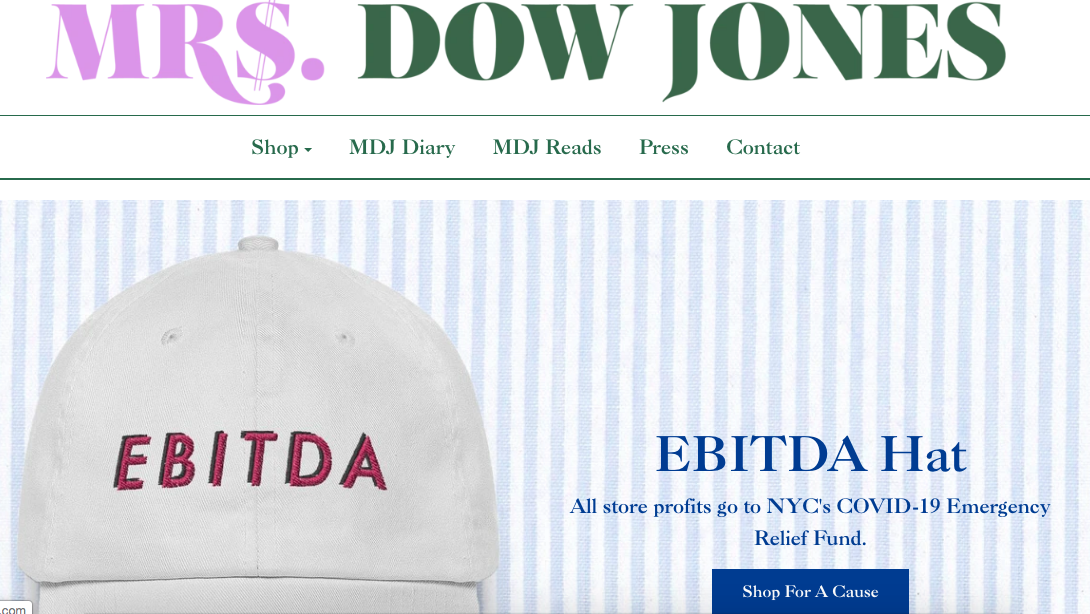
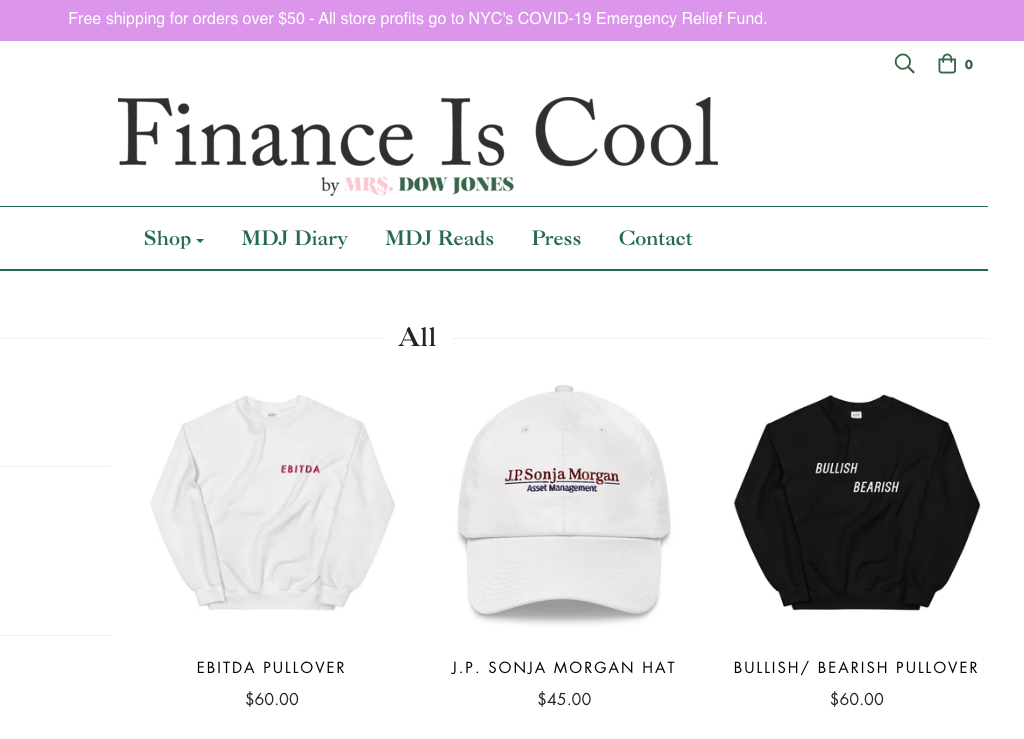
Branded by The Wall Street Journal as the “Financial Guru Millennials Listen To,” Haley Sacks, better known as Mrs. Dow Jones, has quickly amassed a media empire from her popular platform @MrsDowJones, a whip-smart, financial meme account created for the discerning millennial set. In response to the crisis, Sacks has pledged to donate 100% of all proceeds from her online shop to New York City Mayor Bill de Blasio’s COVID-19 Emergency Relief Fund. The fund is working to provide resources to the city’s heavily impacted communities, such as hourly workers, local businesses, and low-income families, to ensure they stay afloat during the crisis.
Lingua Franca
Lingua Franca, the specialty apparel brand founded by Rachelle Hruska MacPherson, has raised over $45,000 for COVID-19 relief through sales of their custom hand-embroidered cashmere sweaters. On April 1, the brand launched its ‘I Heart NY’ collection, pledging to donate 20% of all proceeds to a different New York City charity of choice each week. As part of this campaign, Lingua Franca partnered with ROAR (Relief Opportunities For All Restaurants) on a social media challenge, encouraging the Instagram community to share a favorite ‘NYC restaurant moment,’ and to tag both #TooSmallToFail and @ROAR in their posts.
What’s more, Lingua Franca has pledged to donate $100 to ROAR with each sale of their ‘Too Small To Fail’ cashmere sweater. As of today, the style remains available for pre-order on Lingua Franca’s website.
Our Sunday Best Weekly
Join our community today for special conversations, smart style guides, discerning trend reports (and more)—brought to you only when it matters the most (we don’t spam, promise).
Our Sunday Best, Straight to your feed. Follow us on social today!
As a Black woman, the events of recent days have stolen strength in ways not thought possible—at every level, and from every fiber of my being. As a writer, today, the words I seek to articulate these feelings fail me just as severely.
I know I am not alone in this pain.
The national outrage from the death of George Floyd is beyond the realm of just palpable: it’s impenetrable, all-consuming and every bit justified. This sweeping, collective consciousness, emerging in stark daylight before our very eyes, is the culmination of decades-long, deep-seated systemic racism, perpetrated at the hands of entrenched structures of power. For African-Americans, it’s a tale as old as time, and now, it’s a tale destined, and ever-deserving, to be rewritten.
The historic protests of the past few days are a dark example of how the African-American community, tragically, remains uniquely marginalized in our society. Police brutality, just one constant in the collective challenge that is life as a Black American is a flagrant disregard, not just for the pillars of our justice system, but most importantly, for the value of human life, African-American, or otherwise.
While dismantling cruel structures of power is pivotal to the plight of African-Americans specifically, society also owes it to this community to advance yet another critical reform: anti-racism awareness. The understanding of how to actively practice and advance anti-racism in one’s own life will encourage the needle is rightfully moved for African-Americans, and, by extension—society as a whole. It is time to forge a positive and sustained path forward for a community that has suffered for far too long. Here, 36 resources that will help in the fight for an anti-racist society.
Our Sunday Best, Straight to your feed. Follow us on social today!
Our Sunday Best Weekly
Join our community today for special conversations, smart style guides, discerning trend reports (and more)—brought to you only when it matters the most (we don’t spam, promise).
In a time of crisis, the response from the influencer community is a tale of two cities. One collective is determined to change the narrative.
Written by Sarah Morrison
It started with a simple, and yet revealing question of the times: ‘Do you know anyone who needs Personal Protective Equipment?’ read a WhatsApp message to Serena Goh, a digital content creator based in London.
Goh suspected the answer to her father’s question was yes; after all, the 35-year-old fashion influencer, having risen to prominence by the success of her blog, The Spicy Stiletto, knew her network’s value to be vast.
Boasting over 250,000 followers on her Instagram page and close to 140,000 followers on her blog’s Facebook page, Goh swings in the big leagues where successful digital brands are concerned. Commonly called “macro-influencers,” these content creators are defined by their followings of up to 300,000—followings that more often than not, engage with these creators at extraordinary rates.
But now, plagued by an unrelenting pandemic like so many others, Goh saw the question of PPE as something of a personal call to action.
As a resident of New York City, the current epicenter of COVID-19 in the United States, Urbano knew, perhaps better than most, the outbreak’s path of devastation—the rising case numbers, the abandoned storefronts, the overwhelmed healthcare systems—to be very real.
But perhaps what was most telling for Urbano, was the personal account of the crisis through the eyes of his own mother—a nurse practitioner fighting on the frontline in a hospital in New Jersey.
“I’m fine after working last night. So many codes. Hospital is chaotic. I’m ordering my own PPE. Respirator, masks, face shield, hazmat suit, everyone is doing the same thing for our own protection because hospitals are running low on these supplies,” said Urbano’s mother in a text to Urbano, later shared with Goh. “So many are getting sick and dying even nurses. One nurse in another unit died yesterday of COVID. [She] was only in her 50s.”
It was at this moment that Goh and Urbano felt the human cost of the crisis to be more palpable than ever. Following their conversation, Goh and Urbano realized they had to act.
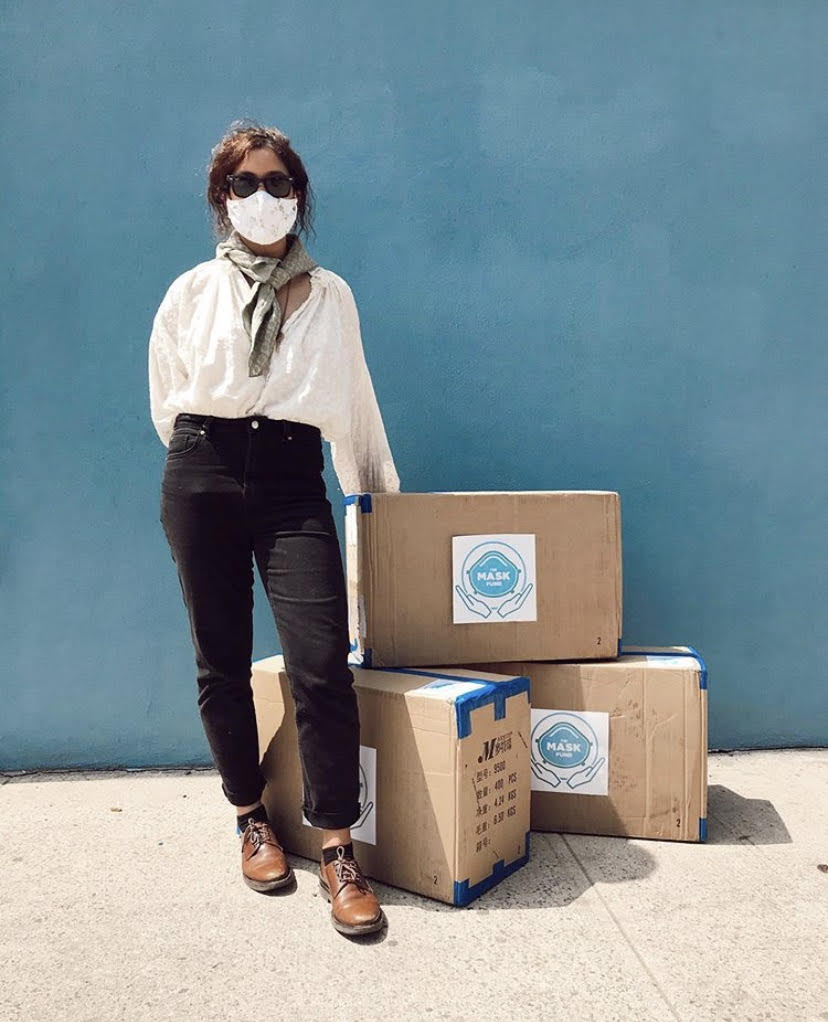
What resulted was the launch of the pair’s charity organization, known as The Mask Fund. Its mission? To deliver Personal Protective Equipment, or PPE, to the frontline.
“[In the early days of the launch] Anthony and I probably had more FaceTime calls in a week than in the entirety of our friendship, in say, I don’t know, seven years,” said Goh.
For several weeks, Goh and Urbano searched the globe for suppliers of N95 masks, sending countless of emails per day to multiple manufacturers for contracts, and enlisting the help of other non-profit organizations, like RETI Center and Last Mile NYC, to distribute their supply.
According to The Mask Fund’s GoFundMe page created on March 31, the organization set an initial fundraising goal of $50,000. As of April 26, just four weeks later, The Mask Fund had already raised close to $20,000; the entirety of which will go directly towards protecting healthcare workers stationed in the nation’s hardest-hit hospitals.
“After our first week, with the help of your generous donations and the help of @reit_center and @lastmile_nyc volunteers, we were able to place our first order of N95 masks, writes Goh in a recent Instagram post on her personal page. “The shipment arrived in New York last week and over the weekend, volunteers such as @troprouge and @mcarthurjoseph successfully delivered the first shipment to healthcare heroes through New York and New Jersey.”
Today, The Mask Fund’s core team, write Goh and Urbano, is comprised of a “community of creatives” with a mission to “make a difference for healthcare professionals fighting an invisible war on the frontline.”
A difference arguably, is needed now, perhaps more than ever.
Now, Goh and Urbano’s response to the crisis, although not unique, is a move content creators would be foolish not to pay heed to. In an industry crowded by countless players all under the watchful eye of their followers, the bones of their personal brands are, fundamentally, considered fragile—even in the best of times. Now, in the era of COVID-19, with the actions of public figures more magnified than ever, many influencers have quickly seen their images being called into question.
In a recent article published by WIRED, author Flora Tsapovsky details the controversy surrounding mega-influencers like Arielle Charnas, who “found herself facing backlash after it seemed her status helped get her a COVID-19 test.” Just eight days after testing positive for the illness, and then announcing the news to her following of 1.3 million, Charnas “found her influence further diminished when she and her family headed to the Hamptons.”
The very next day, according to an article published by TheNew York Times, Charnas “posted a photo of herself and her daughter strolling around the neighborhood.” When people reacted negatively, Charnas turned off commenting on the post.
Although Charnas offered a lengthy apology on Instagram, it seemed many of her followers were not moved. Following the post made on April 2, Charnas took a break from Instagram, going silent for over three weeks until this past weekend, when she updated her fans on her time away “to reflect and be with family.”
Then, there are other prominent names, like 27-year-old entrepreneur Danielle Bernstein of We Wore What, Bernstein’s personal style platform of over 2.4 million followers, who are making a case for sensitivity over self-interest. While Bernstein has certainly not shied away from her native, “outfit of the day” content strategy, the influencer has also shown a remarkable display of responsibility in response to the current crisis.
“Over the past two months, I’ve been so inspired by my community – your stories, your commitment to helping one another, and to giving back,” writes Bernstein in the post. “Because of you, we’ve been able to make a tangible difference … All this started as a response to COVID-19 but it won’t end once the pandemic is over.”
As of May 3, just two days after the post, Bernstein had already seen 100,000 views on the post and thousands of followers to We Gave What’s newly created Instagram page. This engagement metric, an exceptional one to all those with marketing savvy, is also something of a digital barometer; a barometer marking the significant shifts in both influencer and consumer behavior in the era of COVID-19.
Bringing levity to her community in a time of crisis, Ferraro captions her post for the campaign, saying, “I know being stuck at home is hard, but right now we have to remind ourselves that it’s ok if we’re overeating or under-showering … For the sake of everyone, especially our healthcare workers, we just have to #StayHome.”
It’s evident that Ferraro’s acts of advocacy, and Goh, Urbano and Bernstein’s call for charity, is perhaps the greatest lesson the next generation of digital influencers could ever ask for. Challenged by crisis that threatens to upend their very presence, these creative thought leaders are bolstering their platform for a purpose well beyond the material, making the case for a more authentic—and nimble—influencer voice. And now, at an unprecedented scale, they just might influence the way we view all their place in the world.
Our Sunday Best, Straight to your feed. Follow us on social today!
Our Sunday Best Weekly
Join our community today for special conversations, smart style guides, discerning trend reports (and more)—brought to you only when it matters the most (we don’t spam, promise).
It’s a love affair for the ages. Body positivity and the very clothes we wear on our own back.
In today’s indignant times, what with rousing movements such as #MeToo and Time’s Up, this enduring love affair, particularly among women, couldn’t be more apparent.
Emboldened by the courage, confidence, and declaration of a new collective voice led by their own ilk, women all over the world are charting a new course, this time, to challenge long-held notions surrounding their bodies and the motivations behind their clothing of choice.
Evidently, women are witnessing said notions being uprooted before their very eyes: entrenched, traditional motivations of dressing that have long defined the concept of modern femininity are shifting and setting a new movement in motion. Case in point? Dressing for the male gaze. Now, women are paving the way for a new way of thinking to enter the fray. Dressing for themselves.
Call it the antidote to the often harsh realities that are intrinsic to being female in this day and age. Women are breaking out of the mold, quite literally, that seeks to flaunt, and instead, are making a softer statement, embracing fashions that embody less of the va-va-voom appeal, and more of the au naturale allure—safe in the knowledge that their confidence is rooted in their own body positivity, and not in their outfits, nor—the approval of men.
Adding to this wave, is both the entertainment and fashion industry’s commitment to shining new light on female-led movements such as #MeToo and Time’s Up.
Think back a couple years ago, when we saw celebrities showering themselves in all black attire at the 2018 Golden Globes to honor Time’s Up, and designers, like Prabal Gurung, peddling poignant slogans (“Our Minds, Our Bodies, Our Powers, “Nevertheless, She Persisted”) etched in his capsule pieces shown at New York Fashion Week. Each one of these actions, as small as they may seem, are unequivocally raising the female voice higher by underscoring the very depths of said voice’s incredible power. It’s clear influential people worldwide are using fashion as a platform to advocate against critical issues such as sexual harassment and discrimination (among others) in spades. And, it’s working.
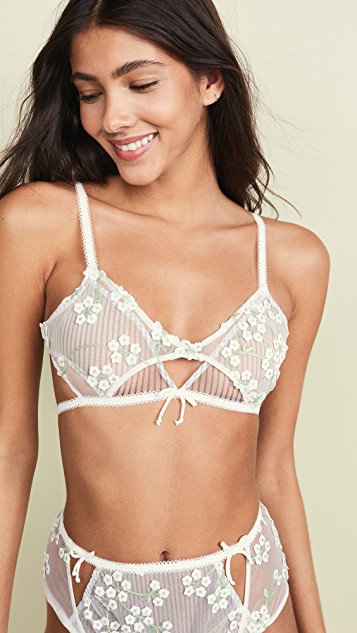
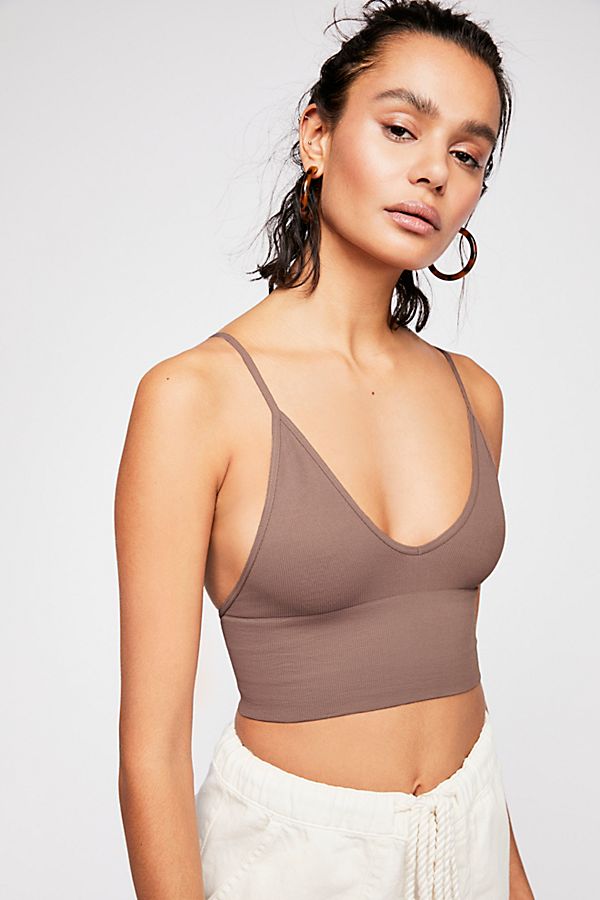
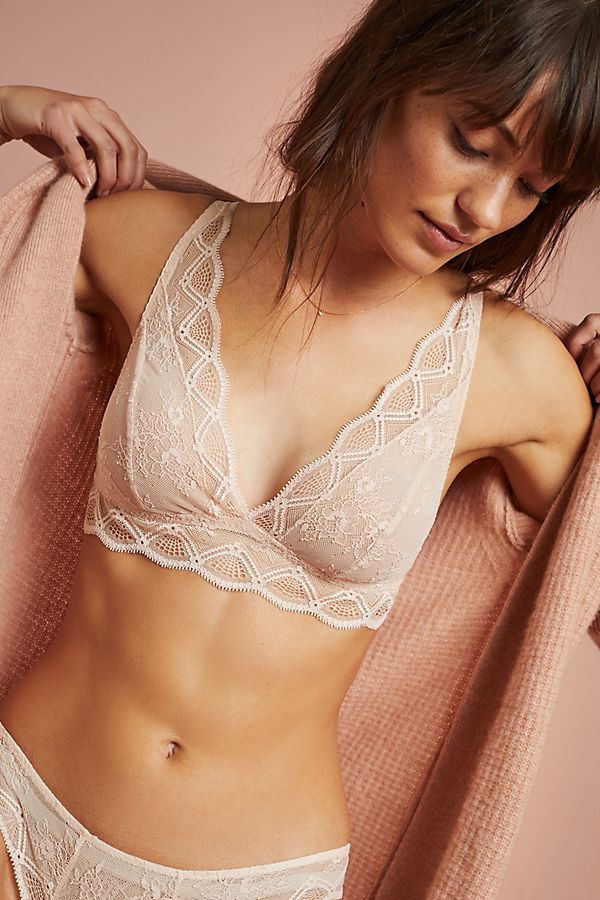
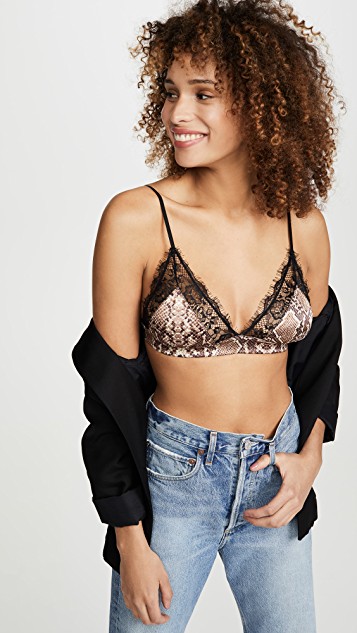
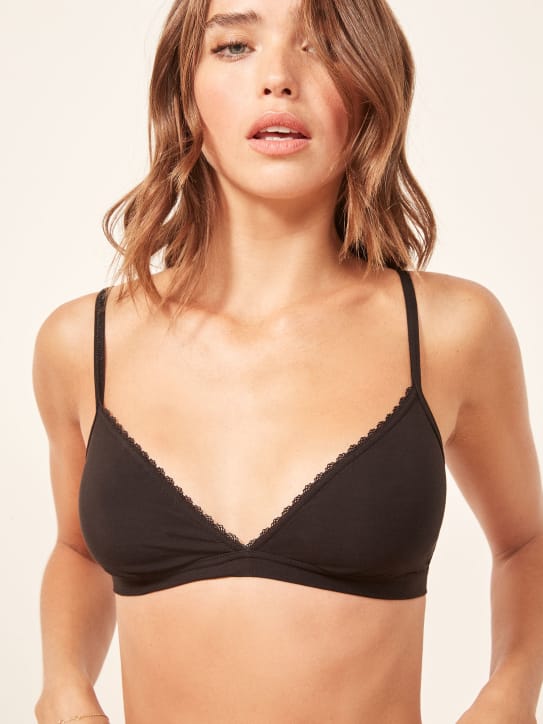
As we pivot from a place that sits tight in the traditional, to one that embraces the new wave of female empowerment, we can’t help but be drawn to fashions that not only portray body positivity, but also, invite a sense of inclusivity and authenticity. Enter: the bralette.
What was once a style of choice of personal triumph for women in the 1960’s and 70’s is now, coming full circle, triumphing as the catalyst for moving the needle forward for women in the political fashion climate of today.
Adding to that sentiment is the idea that the bralette, in more ways than one, represents the manifestation of the female voice—serving as the vehicle to voice grievances and declarations, or express aspirations and affirmations. Dyett also quotes Carlie Quezada, a Detroit-based lingerie boutique owner, who considers the bralette to be “a statement of modern femininity”.
And anyone who’s anyone is wearing one. From Bella Hadid, to Beyonce, to Priyanka Chopra, celebrities spanning the globe are getting on board, losing the restriction of traditional bras in favor of slipping into an insouciant looser number.
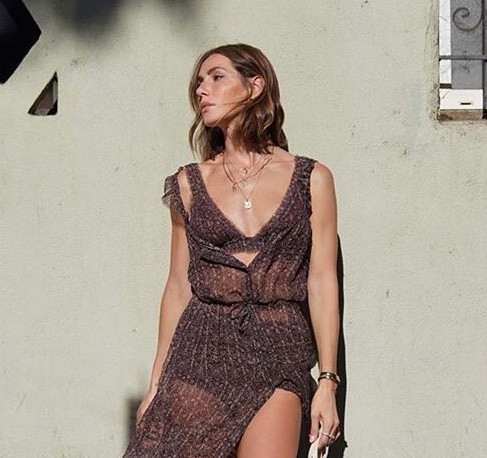
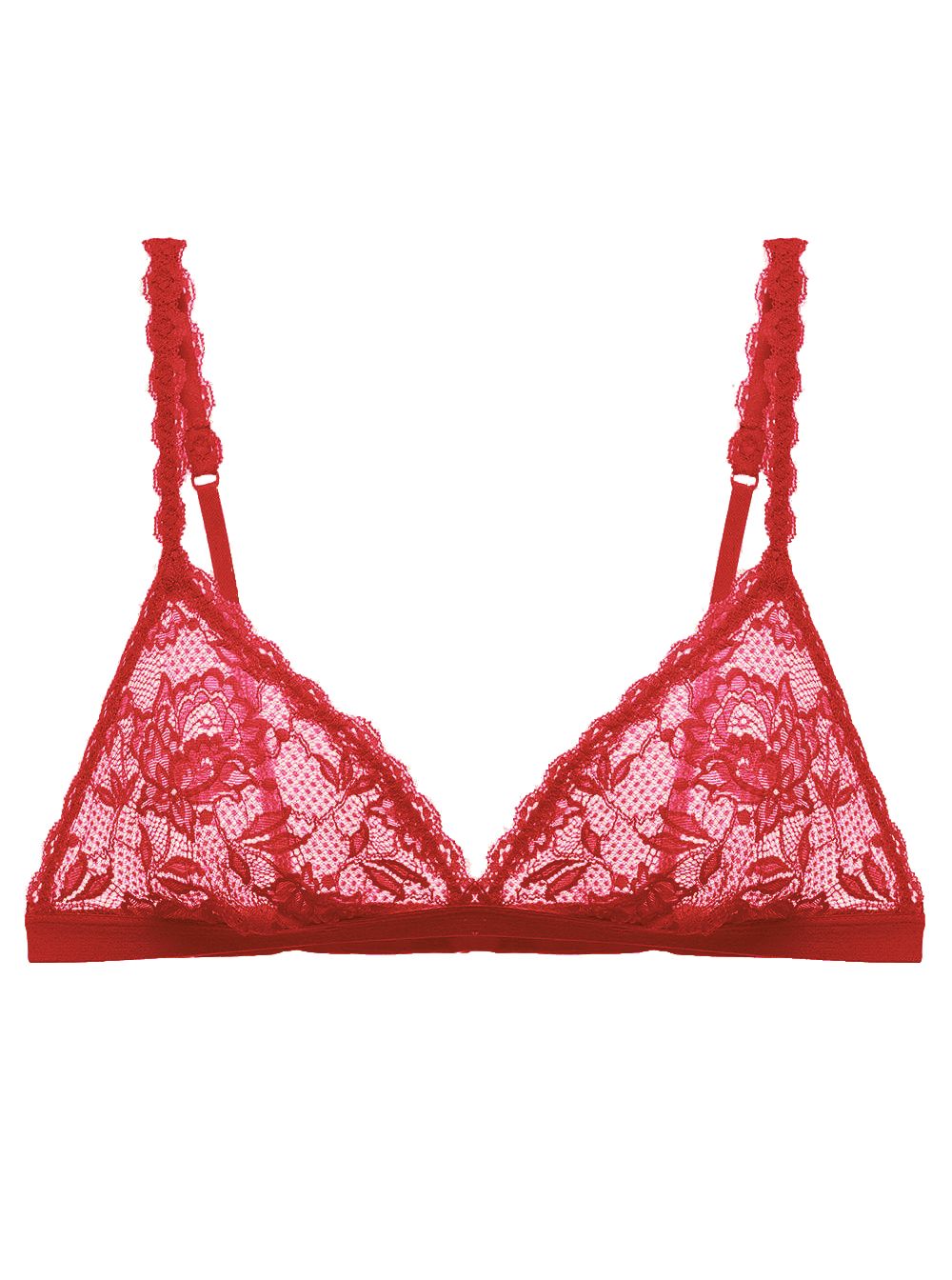
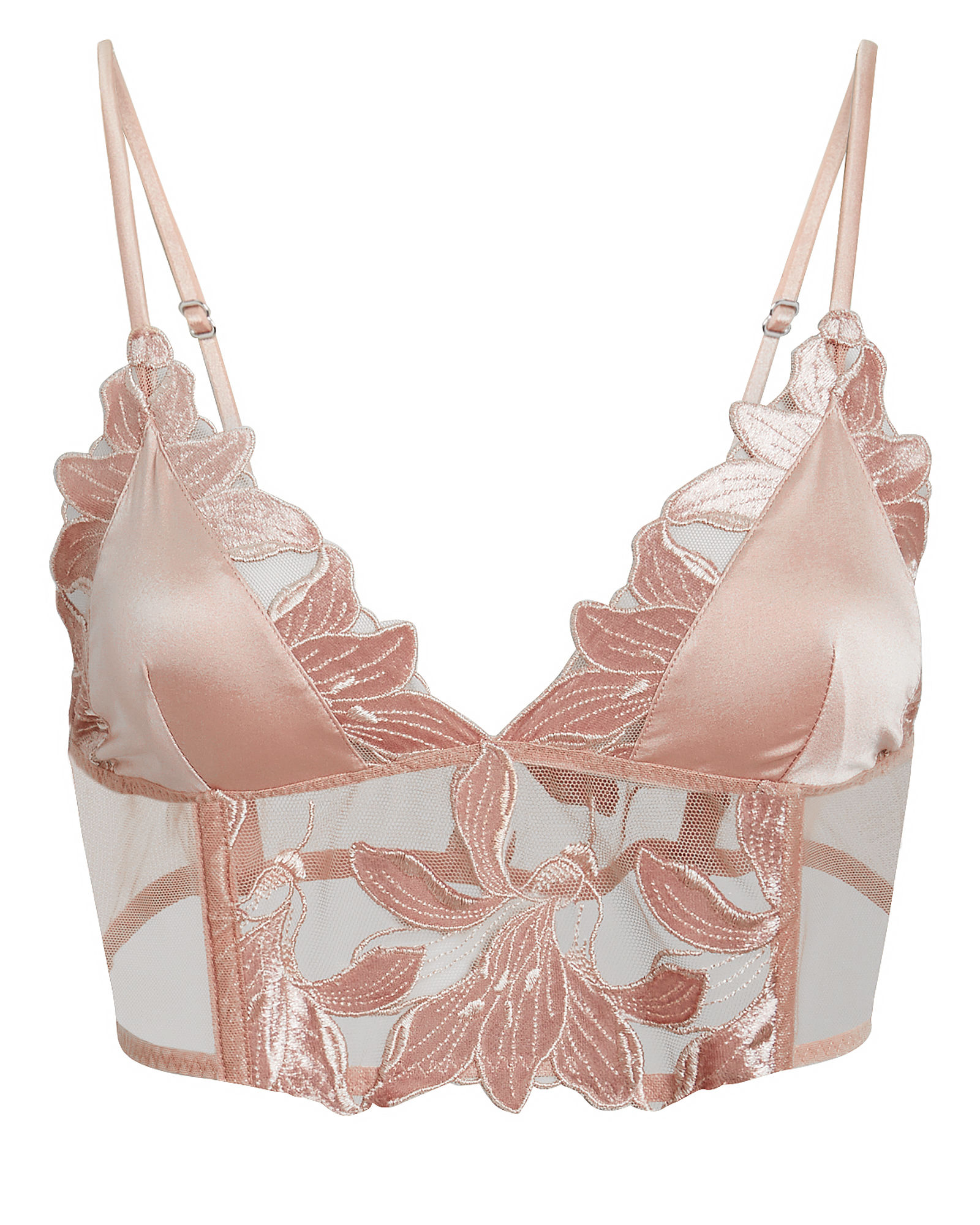
Lacking the underwire found in the alternative, the bralette is decidedly no-fuss, opening its arms to women of any shape, size, lifestyle, what have you. Gaping cups and slipping straps? Hardly. Soft and malleable fabrication reigns supreme. Like a second skin, its innate low-flung shape is a refreshing break away from the often artificially high, rounded and swelled shape that a wired bra can create. And in the way of variety, nothing else comes close. Shoppers have seen an influx of variations that swing from the lacey, barely-there look, to more modest styles that are even cami-like.
What’s more, it can be worn a million and one ways. Toss over a white tee, discreetly layer under a silk blouse or slip dress, or style under a bomber jacket—any which way, it’s hard to get it wrong, it seems.
Alas, it’s certainly clear this is one style that’s here to stay, and make a resounding cultural impact while at it. So go ahead, resolve to relinquish a little of the va-va-voom, if only for modern femininity’s sake, and find liberation in a nonchalant little nothing of your own.
Our Sunday Best Weekly
Join our community today for special conversations, smart style guides, discerning trend reports (and more)—brought to you only when it matters the most (we don’t spam, promise).
Our Sunday Best, Straight to your feed. Follow us on social today!
This is the second part of an ongoing series that takes a closer look at the lives and careers of top tastemakers in the fashion industry. Aimee Croysdill, stylist to stars like Laura Haddock and Daniel Radcliffe, knows a thing or two about piecing together a red carpet-worthy look. Recently, I had the pleasure of earning Croysdill’s ear to get to know the woman behind Britain’s most striking sartorial vision.
Sarah: Did you always want to be a stylist growing up?
Aimee: I desperately wanted to be a dancer, a ballet dancer. I did it from 3-22. It’s amazing how much dancing has shaped my career as a stylist. I learnt so much about how you move your body, how dressing works for all shapes, the way to pose, the way to stand. I’m forever thankful for the discipline ballet dance has given me.
Sarah: Who were your earliest style inspirations?
Aimee: My ballet teacher was and is. She was always immaculate; the way she held her head, her posture, everything was so perfectly put together. Having someone to look up to during your most formative years, who’s known you since a little girl, is hugely inspiring. Ballet teachers have this mystique about them, makes you realise style isn’t just about the clothes you wear. She was so strict with how we tied our ballet shoes, our hair. It gave me a real insight into the discipline of certain forms of art and how it transpires into how I do my work.
Sarah: Is there a roadmap to success as a stylist?
Aimee: I don’t necessarily think there’s a formula. Each week is completely different, different clients, all these twists and turns. My journey started off, I was actually at university, and celebrity styling wasn’t quite as worldly publicised as a career path so it hadn’t even crossed my mind. A friend needed some help with the art department on a film and here is where I met the costume designers who worked with Rihanna at the time. When the film finished they asked me to come work with them in between lectures and handing in dissertations. And that’s how it started. After awhile I started getting my own clients and it just evolved from there.
@aimeecroysdill
Sarah: How do you go about styling a new client? What questions do you like to ask them?
Aimee: Styling is a really collaborative process. It is all about bringing out their personality and their unique style qualities. I really like to get to know a person before I style them. It’s important to have a face-to-face conversation and get a feel for what makes them feel confident. Do they like a feminine aesthetic or a stronger, more masculine one? If they go for feminine, do they like frills or soft fabric? Tailoring or simple, clean lines? Do they want to have a fashion moment or stay more understated? Those sorts of questions set the tone and then we get deeper into it. That’s normally how it goes.
Sarah: Have you ever had any styling moments that went awry?
Aimee: You know it’s so funny because I get asked this question a lot. I genuinely think my brain is wired to forget (laughs). There was one occasion where I was steaming a dress an hour before the client had to get dressed and leave. As you may know, we use samples so the garments could’ve been worn on a photo shoot prior to using. All of a sudden it began to emit this awful smell. The steam was heating up what probably was sweat from the dress having been worn before. All I could think was, there’s no way my client can wear this so I secretly started to wash it in the hotel sink then got all spare hands on deck with hair dryers to dry it in time (the client had no idea!).
Sarah: The top 3 looks you’re most proud of?
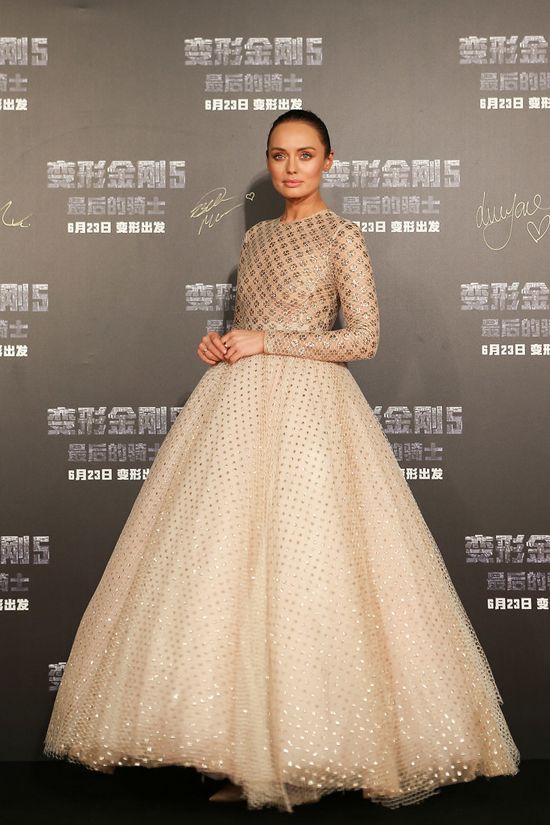
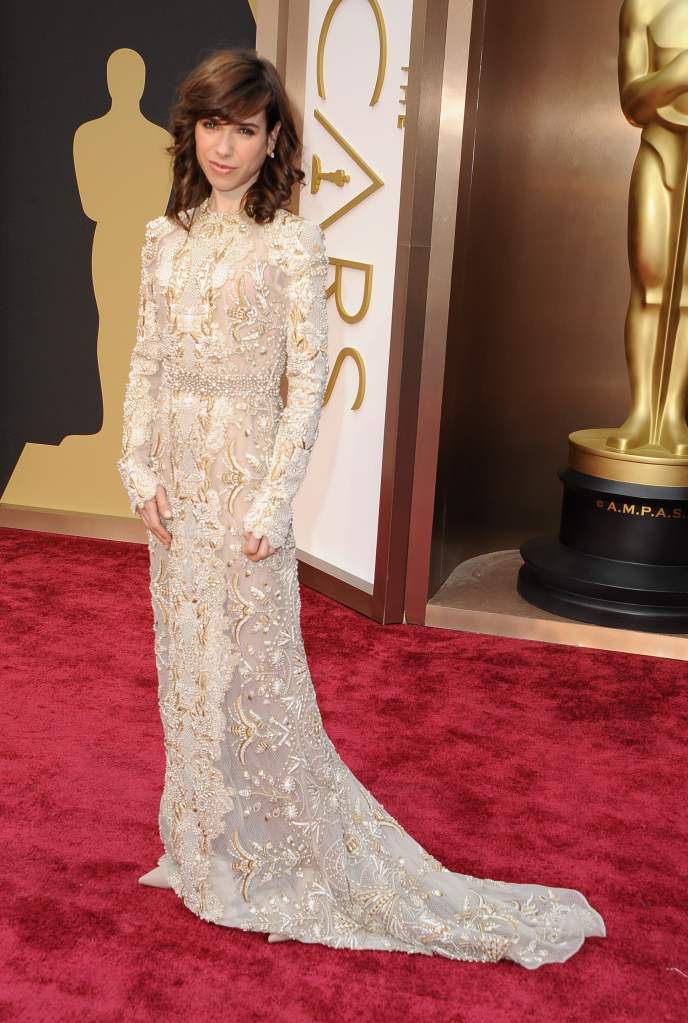
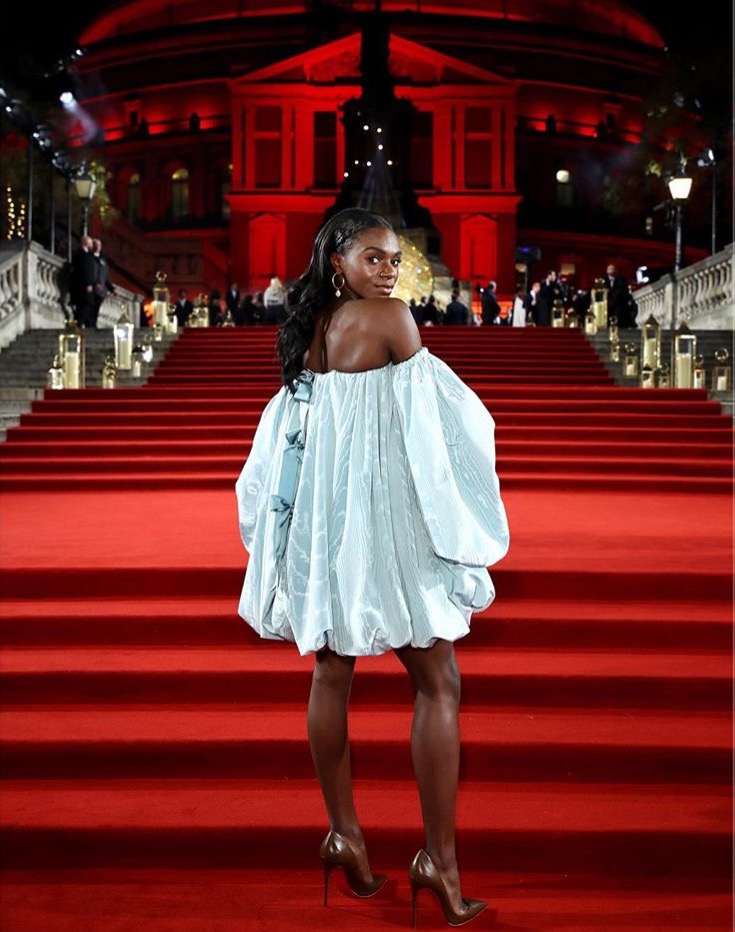
Aimee: This is really hard. But I think the first is my client Laura Haddock, who wore Giambattista Valli couture to the premiere of Transformers in China. I also loved Sally Hawkins for the Oscars in 2014 where we did an exclusive Valentino couture look. We had the same tailor who flew from the atelier in Milan to London then met us in LA. Sally’s dress was completely encrusted in gold thread, pearls and crystallization…it was so heavy! Another would be Dina Asher-Smith at The British Fashion Awards last year. We styled her in a Dilara Findikoglu dress, which was this off-the-shoulder big baby blue puffball design.
Laura Haddock in Giambattista Valli, 2017 (Source: Getty Images)Sally Hawkins in Valentino Couture, 2014 (Source: Getty Images)Dina Asher-Smith in Dilara Findikoglu, 2018 (Source: Getty Images)
Sarah: Do you have any red-carpet style hacks up your sleeve?
Aimee: If I did, I would put my tailor in my pocket everywhere I go. The tailoring is super super important. I think that’s my go-to trick, my tailor. I’ve worked with this amazing woman named Bernie for the last 7-8 years. My clients and I trust her, she’s honest and doesn’t miss a trick. It’s nice to have a second opinion in the room that can look at the finite details and see how a dress can transform from great to flawless. Also, having a needle threaded and ready to go to just in case anything needs nipping is important. As are underpinnings and tape for quick fixes.
S: How do you go about discovering new designers?
Aimee: There’s a website called Tagwalk, and it’s basically like a Google Search engine but for fashion. You can type in a colour or description and it shows you every dress on the catwalk that matches that brief. It also supports new designers so it’s a great research tool too. Tagwalk was launched by a fashion assistant, Alexandra Van Houtte, who was so fed up with spending hours searching for specifics like ‘red dresses’ and decided, there’s got to be a better way than scrolling through hours of catwalk shows to find every red dress from that season. It’s a really great site, even if you don’t work in fashion.
Sarah: Lastly, what advice would you give to women (or men) looking to break into the styling profession?
Aimee: Timing is so important. You can’t guess when is the right timing. I always say to aspiring stylists: if you email one day and you don’t get a response, keep emailing that same person. I had one girl email me repeatedly. Then, one day her third email popped up at the top of my inbox just when I was really under it and needed more hands. She came in the next day and we’ve worked together a few times now. I always say: just persevere. If it doesn’t work the first time, try again, and one day, everything will just fall into place.
Our Sunday Best Weekly
Join our community today for special conversations, smart style guides, discerning trend reports (and more)—brought to you only when it matters the most (we don’t spam, promise).
Our Sunday Best, Straight to your feed. Follow us on social today!
For the style-conscious millennial woman in-the-know, otherwise known as today’s “fashion girl”, the mere mention of the name Revolve instantly conjures images of dreamlike women (very often in a posh, far-off setting), bedecked from top to toe in daringly trendy outfits that are nothing short of swoon-worthy.
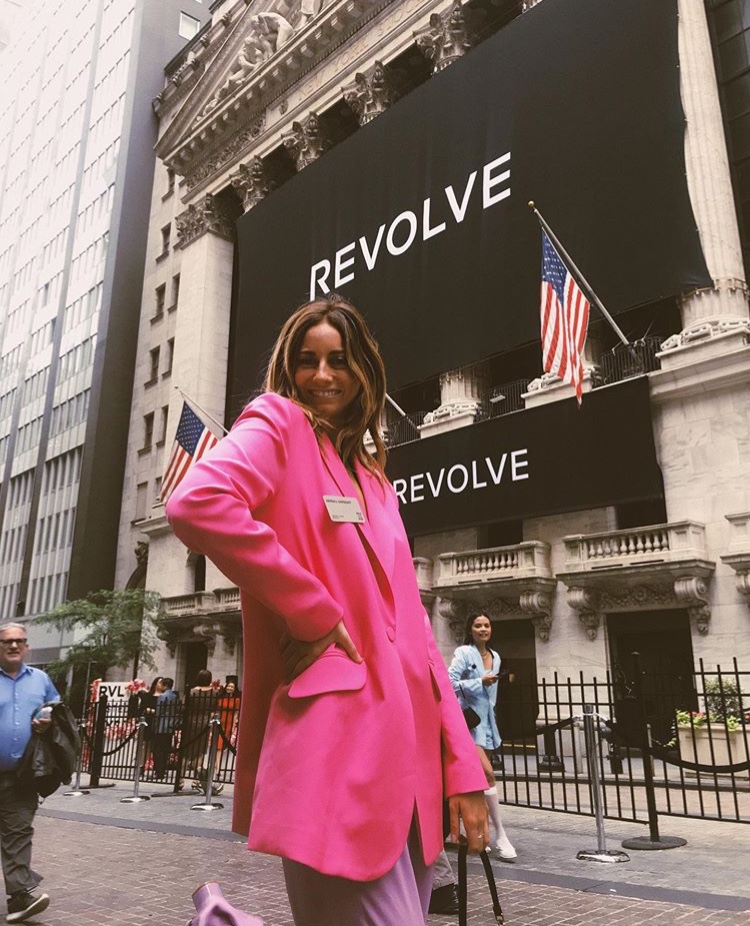
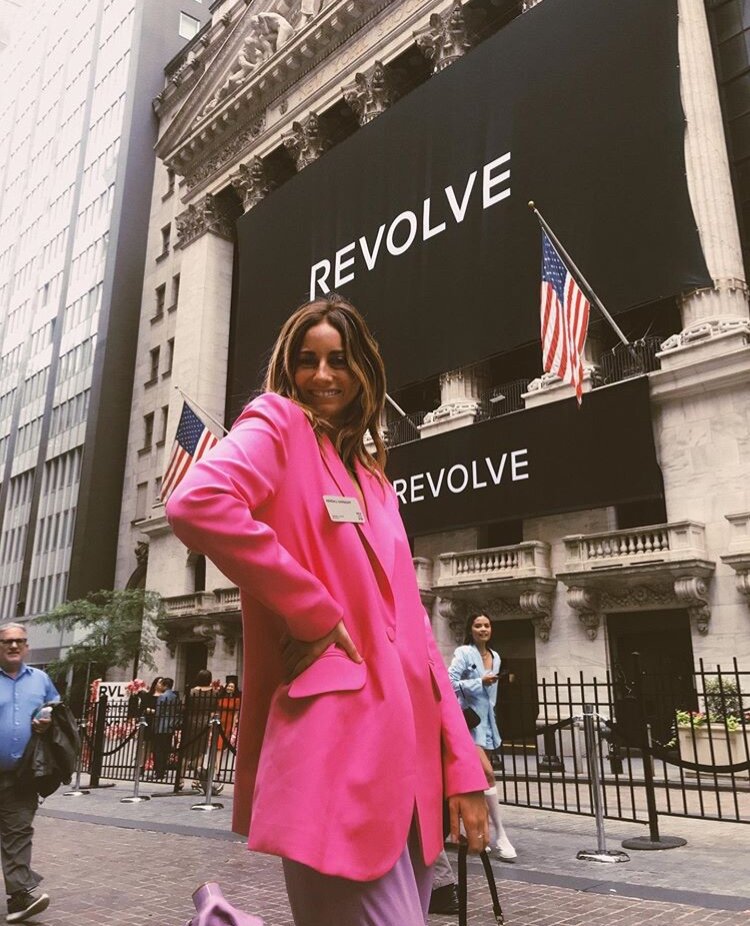
What began 16 years ago as a small e-commerce shop for women ahead of the emerging fashion curve has evolved into a global lifestyle brandboasting an Instagram following of over 3 million and growing, an online designer collection in the hundreds, and even, a firm place in the world of Wall Street (Revolve officially announced itself as a public company in June of this year).
And that’s just the tip of the iceberg for Revolve.
In an industry inundated by market over-saturation and changing consumer habits, Revolve is a formidable force.One look at Revolve’s website and the appeal makes itself apparent: anything from a vacation edit, a date-night lookbook, 9-to-5-ready roundups and a beauty shop can be found at just the homepage alone. Curated to be that one-stop shop, what with daily site refreshes and not to mention, an entirely data-driven back-end that predicts consumer preferences like clockwork, the homepage is punchy, relevant, and digestible—perfect for on-the-go shopping.
With its colloquial copy and vivid image blocks of women with seemingly no hair out of place, we are drawn into the luxury of it all: the jet-set lifestyle, the ease, and the allure of the brand’s, as the name suggests, ever-revolving door of elevated, new-age collections that are just ready for the next adventure. That 20-something fashion aficionado never stood a chance.
The collections, seesawing between a Los Angeles boho chic aesthetic and an edgier, downtown cool New York sensibility, have a distinctly niche flair that is masterfully brought to life by the brand’s unique marketing strategy. Said strategy is entirely influencer-driven—a business model formerly unheard of, and yet now, with Revolve’s quick ascent to a $1.2 billion valuation, is cause for applause.
As you’ll also see on the homepage, wedged between the style guides and lookbooks are blocks of user-generated and sponsored content—content pulled straight from Revolve’s ever-mobile and ever-engaged community of Instagram tastemakers. Some faces are familiar, the bonafide It-girls of the fashion world, while others are your more under-the-radar micro influencers. This collective clout, drawing from upwards of 3,500 influencers in total, is the core of Revolve’s marketing strategy; the fuel behind such influential campaigns such as #RevolveAroundTheWorld that have helped build Revolve’s empire—an empire well worth emulating.
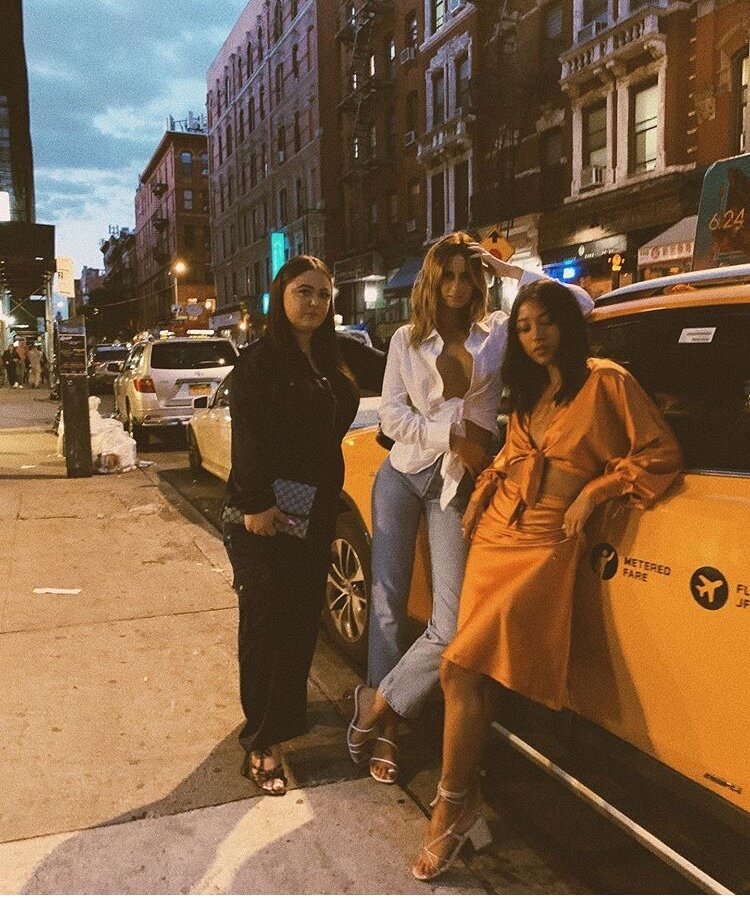
@kndlsargeant
Helping to keep this booming empire alive, from a public relations point of view, is a face you might recognize—if only for her wonderfully curated Instagram—named Kendall Sargeant. Sargeant joined Revolve three years ago to assume the role of the company’s sole PR Director and hasn’t looked back since.
Sargeant is many things—Girl Boss, tastemaker, world traveller, you name it. Without question, she’s a force to be reckoned with, but did you know she’s also incredibly down to earth, too? As I sit here today, a founder of a website barely six months of age, my initial reach out to Sargeant, a figure of solid influence in the fashion industry, was not without mild trepidation. So, naturally, when I saw that unread email crop up on my screen—a warm welcome to a standard cold email—and quickly after, her gracious acceptance to participate in this interview, I couldn’t help but crack a wide celebratory smile. What was to follow was a refreshingly candid exchange that would more than scratchthe surface of Kendall’s far from dull life; a casual pow-wow revealing the many layers that make it as exciting as ever:
Sarah: To start off, can you walk us through your morning routine?
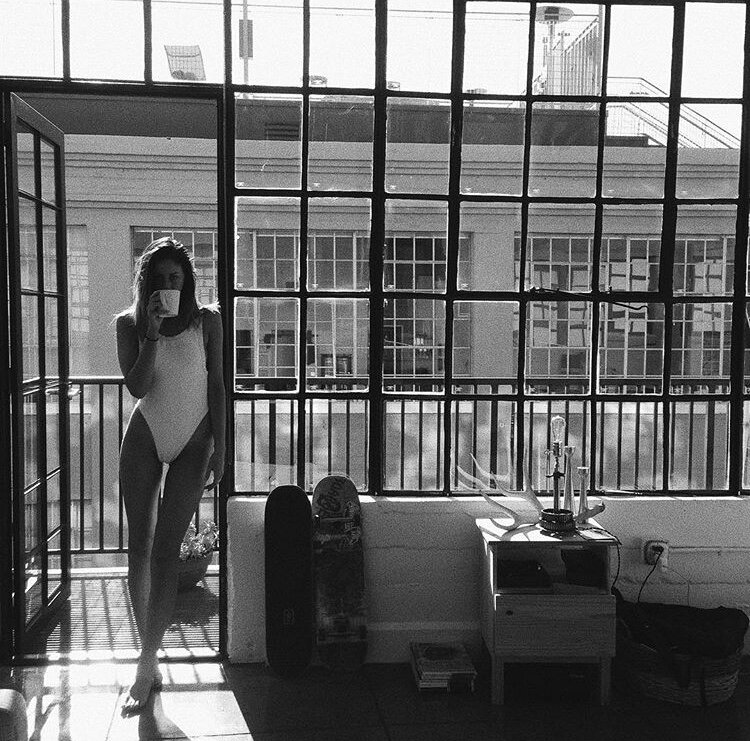
Kendall: Oh man, it fluctuates. I go through phases where I like to be up early, 6:30am, to go for a beach walk or cycle class. Recently, I’ve been soaking up every bit of sleep, waking up at about 7:30am. My amazing boyfriend runs a health food business, Keto Farms, so he brings me one of his iced coffees in bed most days. I check my schedule for the day, respond to any urgent emails, both professional and personal, scroll Instagram, light some palo Santo, and get ready for work. I have an hour commute to our head office in Cerritos so I’m usually in the office by around 10am, depending on what the day looks like.
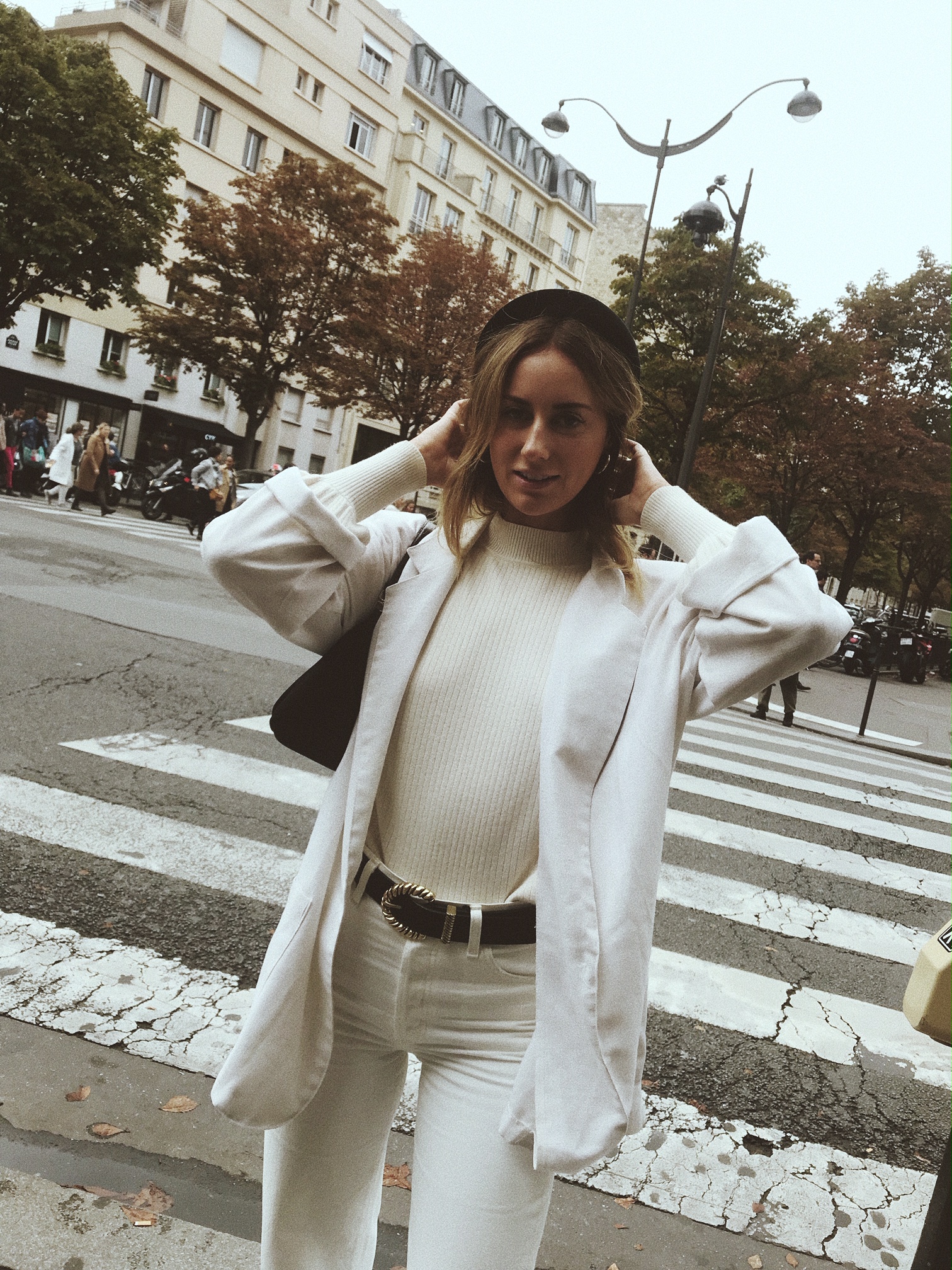
@kndlsargeant
Sarah: What’s at the very top of your to-do list right now?
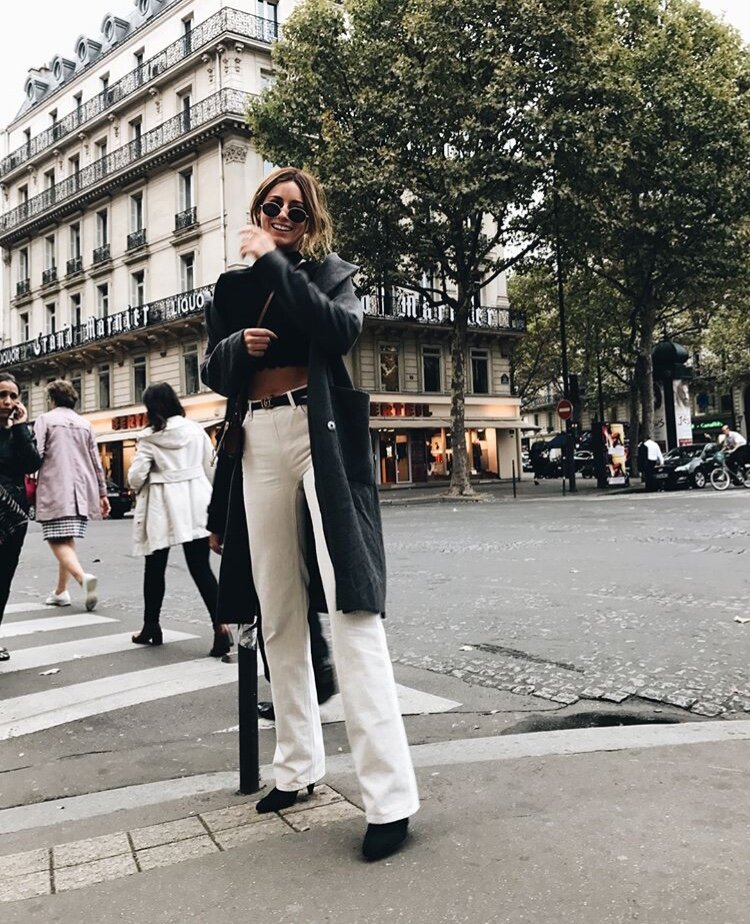
Kendall: Paris Fashion Week is approaching and we’ll be active throughout the week, we also have trips and events in the pipeline so we’re strategizing constantly. My role supports our Chief Brand Office with a ton of partnership opportunities, which is super exciting and keeps me on my toes. My to-do list also includes working out, seeing my friends, sleeping enough, drinking enough water, face timing my family in Australia, maintaining a decent manicure…the list goes on.
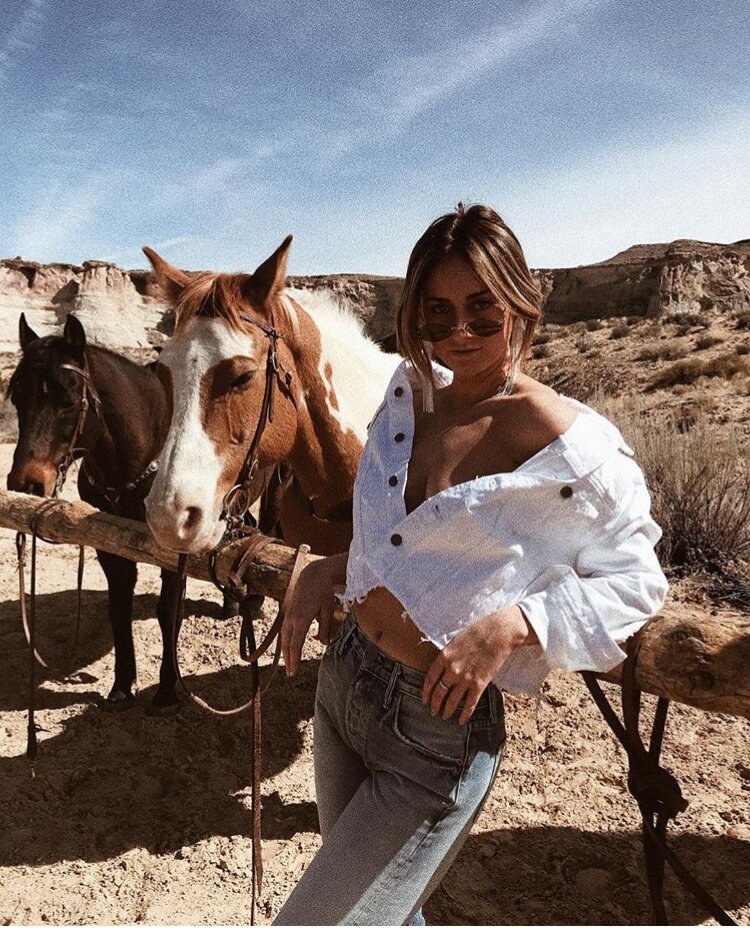
@kndlsargeant
Sarah: Based off your Instagram, your outfits are #wardrobegoals. So tell us, what’s your go-to ensemble for conquering the workday in style?
Kendall: I’m a pants + shirt kind of girl however my outfits are certainly mood & schedule dependent. I try to keep things simple, I rarely wear patterns or prints unless we have an event or a REVOLVE trip. I probably have three office outfits I wear/edit/repeat:
Vintage Levis or some type of denim jean, white button up or tee, gold jewelry and a sandal/heel. Zara has great shirting.
High waist pant or trouser, cropped tee or sweater + a blazer. I have a couple vintage blazers, I’m on the search for more, throwing on a well fitting blazer can completely transform my mood.
I’m trying to experiment with the midi skirt & tee/sweater vibe more often, sometimes with a sneaker, sometimes just a tiny heel. L’Academie is one of my favorite REVOLVE brands, they have simple but feminine work options.
If I’m being honest, there’s usually 1 day a week where I wear work out tights, a vintage sweater and my Givenchy sneakers, but only if I have internal meetings that day. Oh and I’ve been wearing Mejuri gold rings & Kinn earrings/rings everyday.
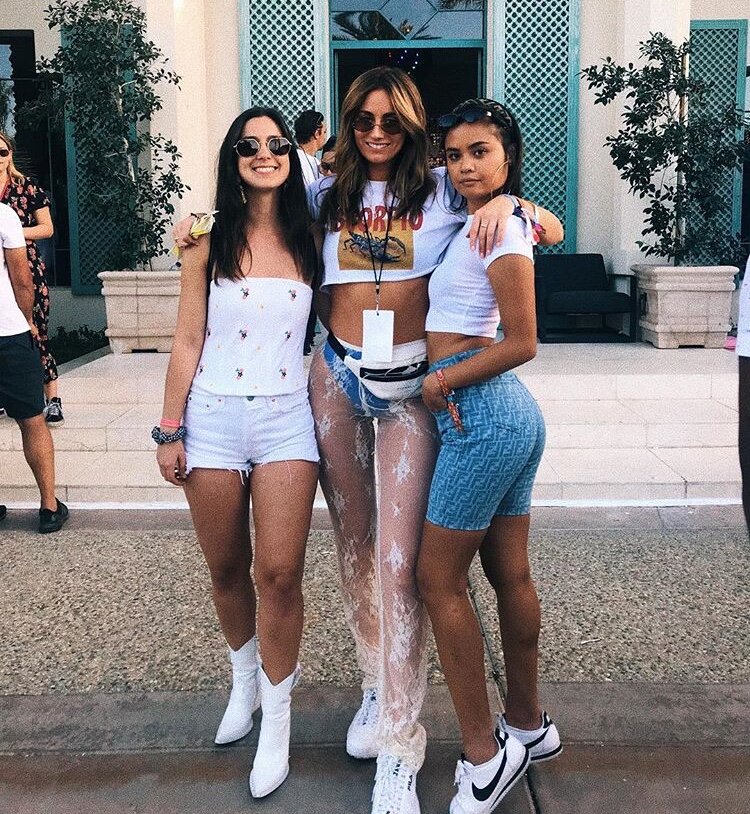
@kndlsargeant
Sarah: As a PR director for a major brand, many girls would dream to be in your position. Just how exactly did you land where you are today?
@kndlsargeant
Kendall: I’m asked this question often and there’s no cheat sheet. I started working in the fashion industry (for the leading Australian e-retailer at the time, MyCatwalk) while I studied my Bachelor of Media at Macquarie University in Sydney. I networked a ton, I dabbled in all different departments – sales, social, customer service, buying, PR, email marketing.
I ended up being poached by an incredible businesswoman, Frankie Presser, the owner of a boutique Sales/PR agency, and I became her Showroom co-ordinator. I worked my way up the ranks there to a managerial position, supporting her and the brands we represented until an opportunity to lead PR, Sales & Social opened up with an Australian Designer, Maurie & Eve. I transitioned to head their Australian & International press & sales strategy and helped kickstart their social content- IG back then was just starting to be a ‘thing’. This role was a great learning experience, I reported directly to the founders/Designers and learnt to wear many hats, travel, be independent, stay organized. I always knew I wanted to travel abroad and potentially work abroad, so after a few years I left my position and packed a bag and landed in America, no job, no idea what I was going to do. This is when shit got real.
One of my first interviews was with Raissa Gerona at REVOLVE, at the time they were investigating how to expand their PR department but the shoe didn’t quite fit. We promised to stay in touch. From there, I interviewed a ton, cried a ton, nearly took a few jobs, missed out on a few jobs, until one day, my paths crossed with the Founders of Australian Fashion Labels, they owned 7 Aussie brands at the time and were looking for someone to open their PR Showroom within their newly established LA headquarters. A ton of the contacts I had worked with (via email, from Australia), Aimee Song, Dani Song, Danielle Bernstein, Jill Wallace, Monica Rose (who at the time dressed the Kardashians) + so many more, were so kind and welcoming, we were mutually excited to be meeting in person.
From there, I built my little black book, I networked a ton, cold call emailed every stylist, influencer, editor I could find and managed to establish incredible relationships. The brands I represented were sold on REVOLVE.com so our Marketing Director and I were continually looking for ways to partner with REVOLVE, I was introduced with the Brand Marketing team (members who are now my counterparts today!). Eventually, Raissa and I re-connected and got to talking. It took us a full year of conversation, meeting with Michael, our co-CEO, thinking through the role together, before I officially transitioned to Public Relations Director for REVOLVE & our sister site FWRD. I now oversee Public Relations & collaborative partnerships across REVOLVE, FWRD, super down & our 23 privately owned brands. This is everything from Talent deals to collaborative brands with Influencers or celebrities to media partnerships and more. It’s been such an incredible experience and I’m blessed to call this my job.
Sarah: Can you name a peak and a valley of your last workday?
Kendall: A lot of what I do is problem-solving, crisis management if you will. We had an event recently and there was a major change in plans, one of the key celeb talents couldn’t attend last minute so we had to re-work the event run of show, press strategy and work with our social team to fill in gaps within the content strategy to find a solution. Everything ran smoothly and was a huge success. I’m faced with challenges often, whether it be negotiating a difficult deal or smoothing over a press crisis, it’s often overwhelming and stressful, but I also take great pride in being able to turn a negative into a positive. It’s great character building, I kind of thrive on the challenge.
@kndlsargeant
Sarah: With each day bringing its fair share of challenges, how do you stay motivated?
Kendall: You have to keep your mind on the big picture. Knowing that everything happens for a reason is important for me. A deal falling through, or a budget change, or a variation in objective are all opportunities to be creative and test yourself. With a great team by your side and supportive leadership, anything can be achieved.
@kndlsargeant
Sarah: After a long day, what’s your favorite way to decompress?
Kendall: Vino. I love cooking dinner with my boyfriend or visiting new restaurants. We just moved house so I’ve been super into homewares and interior design. Most nights I end up on our couch in a spiral of homewares websites, Pinterest boards and shows about house flipping and fixer uppers…it’s dangerous.
@kndlsargeant
Sarah: Lastly, to end on a contemplative note, what does the future of REVOLVE look like to you?
Kendall: It’s such an incredible company to be involved with, I have no doubt we’ll continue to adapt our business, grow upon our existing network of 3500 influencers, nurture and develop our experiential marketing strategy and continue to work with emerging and established designers that are disrupting the industry. We’re just scratching the surface, it’s going to be an exciting ride.
Our Sunday Best Weekly
Join our community today for special conversations, smart style guides, discerning trend reports (and more)—brought to you only when it matters the most (we don’t spam, promise).
Our Sunday Best, straight to your feed. Follow us on social today!








 OUR SUNDAY BEST